Types of Shower Door Hinges
When designing or specifying a shower enclosure, few components carry as much weight—both literally and functionally—as the hinges. A shower door hinge does more than just connect a glass panel to the wall; it determines the door's swing, load capacity, alignment, and long-term durability. Choosing the wrong type can lead to sagging doors, misaligned panels, callbacks, and unhappy end users.
For professionals involved in commercial projects, hospitality developments, or large-scale residential builds, understanding the different types of shower door hinges is not just technical knowledge—it's a procurement necessity.
This guide breaks down the major types of shower door hinges, their applications, and the key factors to consider when selecting them.
Standard Duty Shower Hinges
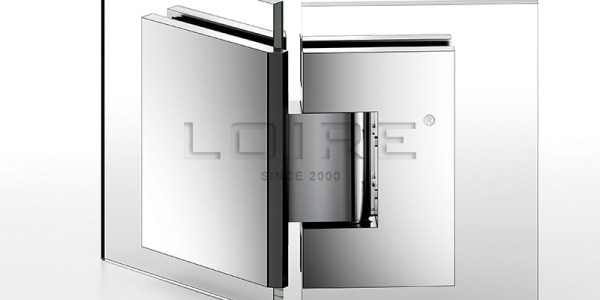
Standard duty hinges are the most common type found in residential bathrooms and light commercial applications. Designed for 3/8" (10mm) to 1/2" (12mm) tempered glass, they provide reliable support for single-piece shower doors that swing open and shut.
What sets standard duty hinges apart is their simplicity. They typically consist of two leaf plates connected by a central pin, with one leaf mounted to the wall or jamb and the other clamping onto the glass. Installation is straightforward, and the hinge mechanism offers smooth, consistent operation over years of daily use.
For projects where the glass panel is under 30 inches wide and the door height doesn't exceed 72 inches, standard-duty hinges are more than adequate. They are also the most cost-effective option, making them a popular choice for apartment complexes, residential renovations, and mid-tier hotel bathrooms.
Standard Duty Shower Hinges with Covers
An evolution of the standard design, this variant adds decorative covers that conceal the mounting screws and create a cleaner, more polished appearance. The covers are typically made from the same stainless steel or zinc alloy material as the hinge body, ensuring a seamless look.
From a procurement perspective, covered hinges are worth specifying when the visual finish matters—think high-end residential bathrooms, boutique hotels, or spa facilities. The trade-off is a slightly higher unit cost, but the aesthetic upgrade can elevate the entire shower enclosure.
Adjustable Standard Duty Shower Hinges
One of the most practical innovations in hinge design, adjustable standard duty hinges allow installers to fine-tune the door's position after installation.
This is critical because walls are rarely perfectly plumb, and even a 1-2 degree misalignment can cause a shower door to drift open or shut on its own.
Adjustable hinges typically offer 2-4 degrees of adjustment in both horizontal and vertical axes. For contractors working on older buildings or uneven tile surfaces, this feature can save hours of installation time and prevent the need for shimming or re-drilling.
Adjustable Standard Duty Shower Hinges with Covers
Combining the adjustability feature with aesthetic covers, this type offers the best of both worlds. It is the preferred choice for mid- to high-end projects where both installation convenience and visual quality are non-negotiable.
Heavy Duty Shower Hinges
When the glass gets thicker or the door gets wider, standard duty hinges won't cut it. Heavy-duty shower hinges are engineered for 1/2" (12mm) to 3/4" (19mm) tempered glass and can support doors weighing up to 80 kg (176 lbs).
The key structural difference lies in the hinge body. Heavy-duty models use thicker stainless steel plates, larger pivot pins, and reinforced clamping mechanisms. They are designed to handle the increased torque associated with wider glass panels, larger door sizes, or commercial-frequency use.
These hinges are indispensable for:
- Commercial shower enclosures (hotels, gyms, locker rooms)
- Large format shower doors (over 36 inches wide)
- Luxury residential projects with thick glass panels
- Barrier-free or zero-threshold showers where the door bears more weight without a bottom guide
Heavy Duty Shower Hinges with Covers
Just like their standard duty counterparts, heavy-duty hinges are available with decorative covers. For commercial projects where the hardware is visible and part of the overall design language, specifying heavy-duty hinges with covers ensures both performance and presentation.
Adjustable Heavy Duty Shower Hinges
For large glass doors installed on imperfect walls, adjustable heavy-duty hinges are the gold standard. They combine the load-bearing capacity of heavy-duty construction with the installation flexibility of adjustable mechanisms. In high-end hospitality projects where installation speed and precision matter, this is often the go-to specification.
Pivot Shower Hinges
Pivot hinges operate on a different principle than standard leaf hinges. Instead of attaching the hinge body to the side of the glass, pivot hinges mount at the top and bottom corners of the glass panel, allowing the door to rotate around a central vertical axis.
The advantage? Pivot hinges provide a more minimalist look because the hinge mechanism is mostly hidden at the top and bottom of the glass. This is particularly appealing for frameless shower designs where the goal is maximum transparency with minimal visible hardware.
Pivot hinges are typically used for:
- Heavy glass doors with side-mounted hinges would create excessive stress
- Doors that need to swing in both directions (double-action)
- Aesthetic-focused designs where visible side hinges are undesirable
That said, pivot hinges require more precise installation and are generally less forgiving of wall irregularities than adjustable side-mounted hinges.
Lift-Off Shower Hinges
Lift-off hinges, also called "lift and slide" or "lift-off" hinges, allow the glass door to be lifted off the hinge pin for cleaning, servicing, or replacement without removing the entire hinge assembly from the wall.
The design incorporates a removable pin or a sliding mechanism that disengages the door side from the wall-mounted plate. This is a practical choice for commercial shower installations where maintenance access is important, or for residential bathrooms where the owner wants to thoroughly clean the hinge area.
Lift-off hinges are available in both standard-duty and heavy-duty configurations and are particularly popular in hotel maintenance programs where housekeeping teams need to access the shower area for deep cleaning.
Choosing the Right Hinge Type for Your Project
Selecting the correct shower door hinge type comes down to a handful of variables:
- Glass thickness. This is the first and most important factor. Standard duty hinges handle 3/8" to 1/2" glass. Heavy-duty hinges are required for 5/8" to 3/4" glass.
- Door width and weight. The wider the door, the more torque is applied to the hinge. A 36-inch-wide 3/8" glass door generates significantly more leverage than a 24-inch door. When in doubt, go up one grade.
- Installation conditions. If the walls are tiled, uneven, or the structure is older, adjustable hinges will save time and frustration. For new construction with plumb walls, fixed hinges work fine.
- Aesthetic requirements. Visible screw heads can detract from a clean frameless look. If the hinges are exposed, specify models with covers. If the goal is minimal visibility, consider pivot hinges.
- Maintenance needs. For commercial projects where doors need periodic servicing, lift-off hinges simplify the process considerably.
Why Material and Finish Matter
All shower door hinges live in a wet environment. The choice of material directly correlates with the product's lifespan. Stainless steel 304 (SS304) is the industry standard for shower hinge manufacturing. It offers excellent corrosion resistance, structural strength, and a consistent finish. For coastal areas or chloride-heavy water conditions, SS316 (marine-grade stainless steel) provides additional corrosion protection.
The finish should match the rest of the bathroom hardware. Common options include satin brushed stainless steel, polished chrome, matte black, and oil-rubbed bronze. For commercial projects, satin stainless steel is the most practical choice—it hides water spots and fingerprints better than polished finishes.
Final Thoughts
Understanding the types of shower door hinges is not just about technical specs—it's about making informed decisions that affect installation speed, maintenance costs, and long-term performance. Whether you're specifying hardware for a 200-room hotel, a single luxury villa, or a production run of residential bathrooms, the right hinge type makes the difference between a door that works for decades and one that causes problems from day one.
For bulk procurement, working with a manufacturer that offers the full range of hinge types—from standard-duty to heavy-duty, from fixed to adjustable, and from pivot to lift-off—ensures consistency across your project and simplifies the supply chain.