By Irene Kong, CEO of LOIRE Hardware
At LOIRE, the drawing sets how we make a shower fitting and what goes in its box. For a tubular handle, we cut and bend the tube, then check the space between the mounting holes. A hinge body can start as a rough forging. We machine the holes and flat faces, smooth the surface and check how the parts move together.
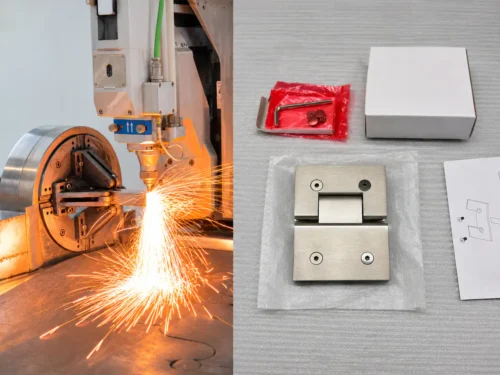
One of our packing photos shows what that means for a buyer. Beside a finished hinge sit a box, a red accessory packet and a sheet about gaskets. The finish is easy to see. The drawing and packing list answer two other questions. Will the hinge fit the door? Will the installer have what the model calls for when the box arrives?
1. What LOIRE’s Factory Is Set Up to Produce
LOIRE makes shower door hardware in Foshan, Guangdong, China.
LOIRE reports that the site covers 8,000 m² and has more than 80 production and inspection machines. Its product range includes hinges, glass clamps, handles, knobs, towel bars and support bars. The workshop, product development team and showroom share the site.
For a custom order, LOIRE starts with drawings, samples, or a list of product needs. The team reviews the design and prepares a quote. Sample work and approval follow before the factory starts the bulk order.
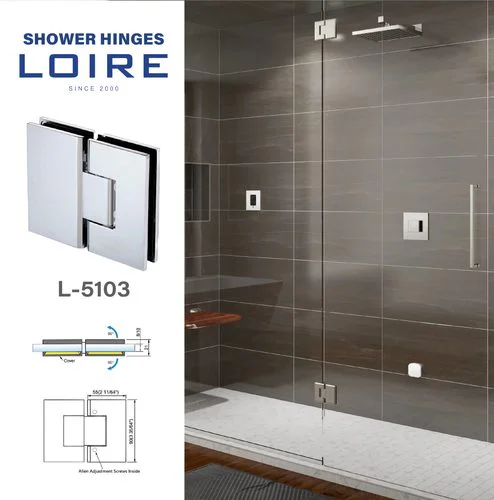
A sample gives the two sides something they can measure and handle. For a tubular pull, the distance between its mounting holes belongs on the drawing. For a hinge, the drawing also needs to show how the body, pads and screws fit together.
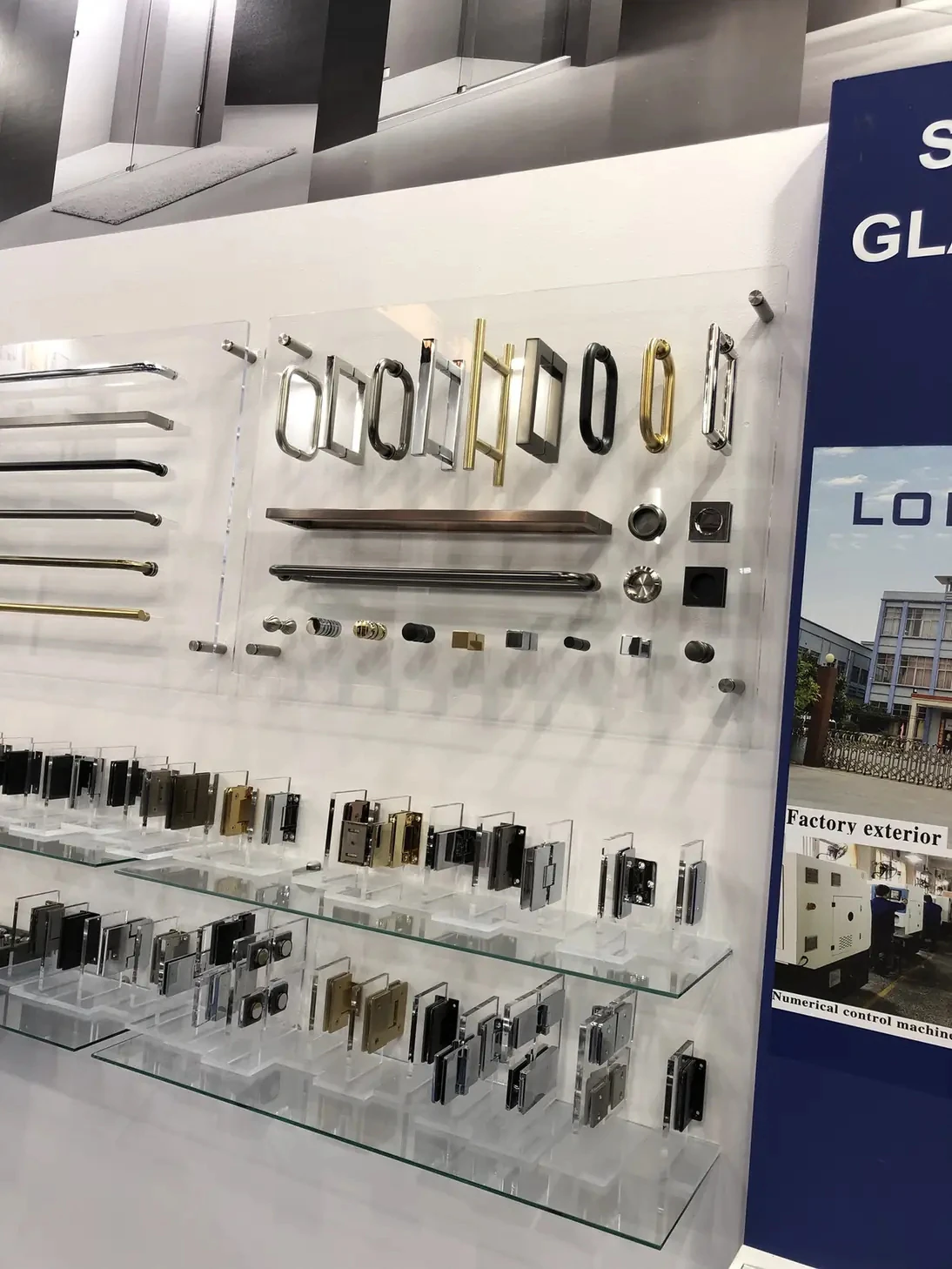
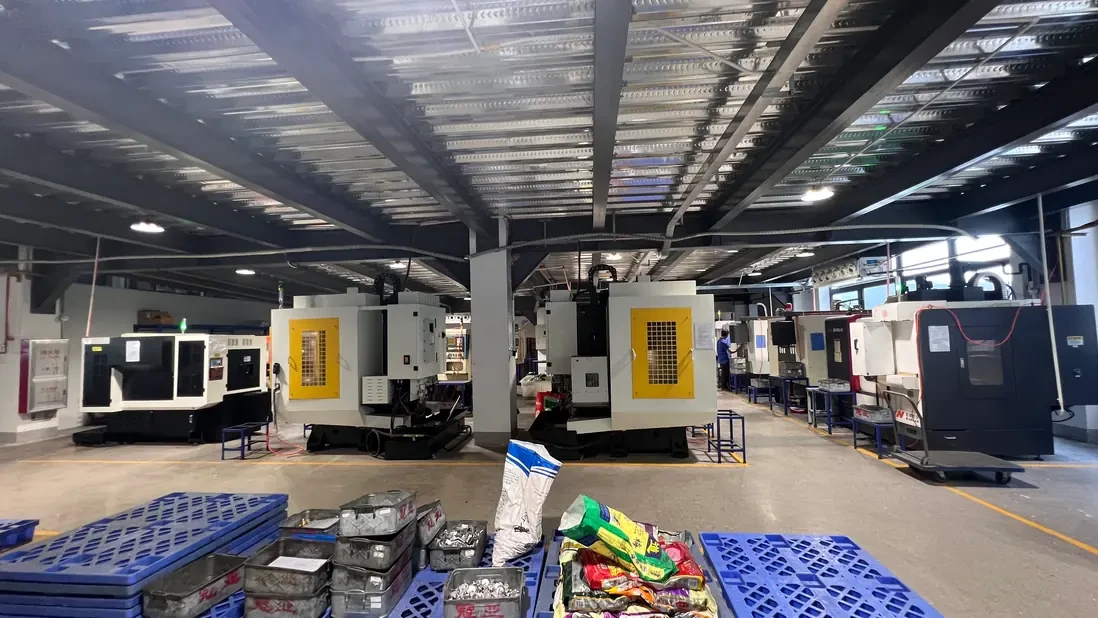
LOIRE supplied the factory and trade show photos and reports that it has consent to share these general views. Customer order and batch details stay private.
2. From Material Preparation to CNC Machining
Cutting Material for the Part
Cutting prepares stock for later work. The guide shows both tube cutting and bar cutting. Tube stock has a hollow center. Bar stock provides a solid starting shape.
The starting shape matters. A tubular pull needs enough length for its bends and both ends. Once the tube is cut, the location of each bend affects where the ends land. The mounting centers on the drawing give the shop a distance it can check on the finished pull.
Forming the Required Shape
Hot forging uses heat and force to shape metal. A forging step forms a rough shape for further work. The part drawing sets the features that later steps must add or finish.
LOIRE’s guide also lists laser cutting and CNC machining. The handle overview describes cutting, bending and welding before finishing, assembly and final checks. A welded handle and a forged body take different routes. The process sheet for the model identifies the work included in its quote.
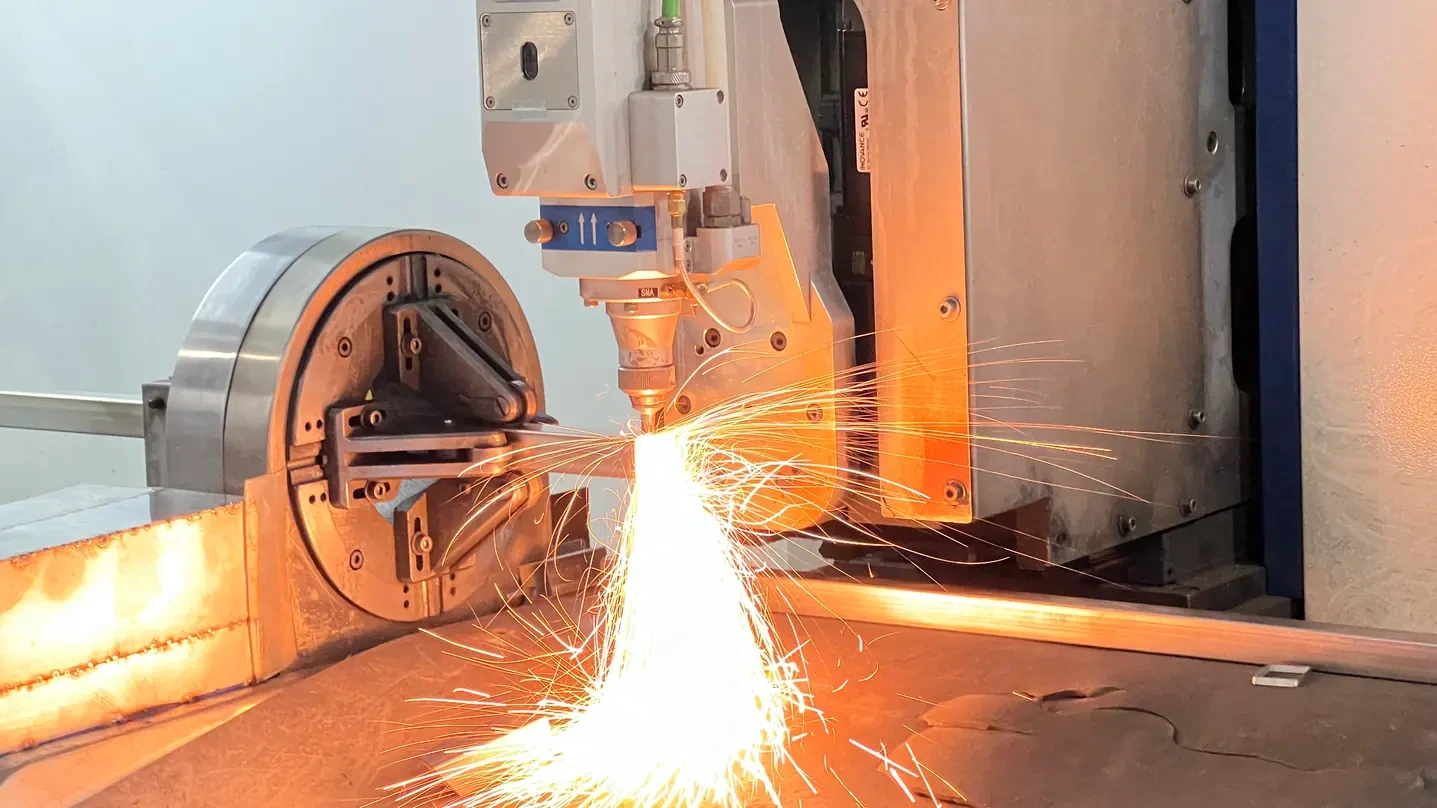
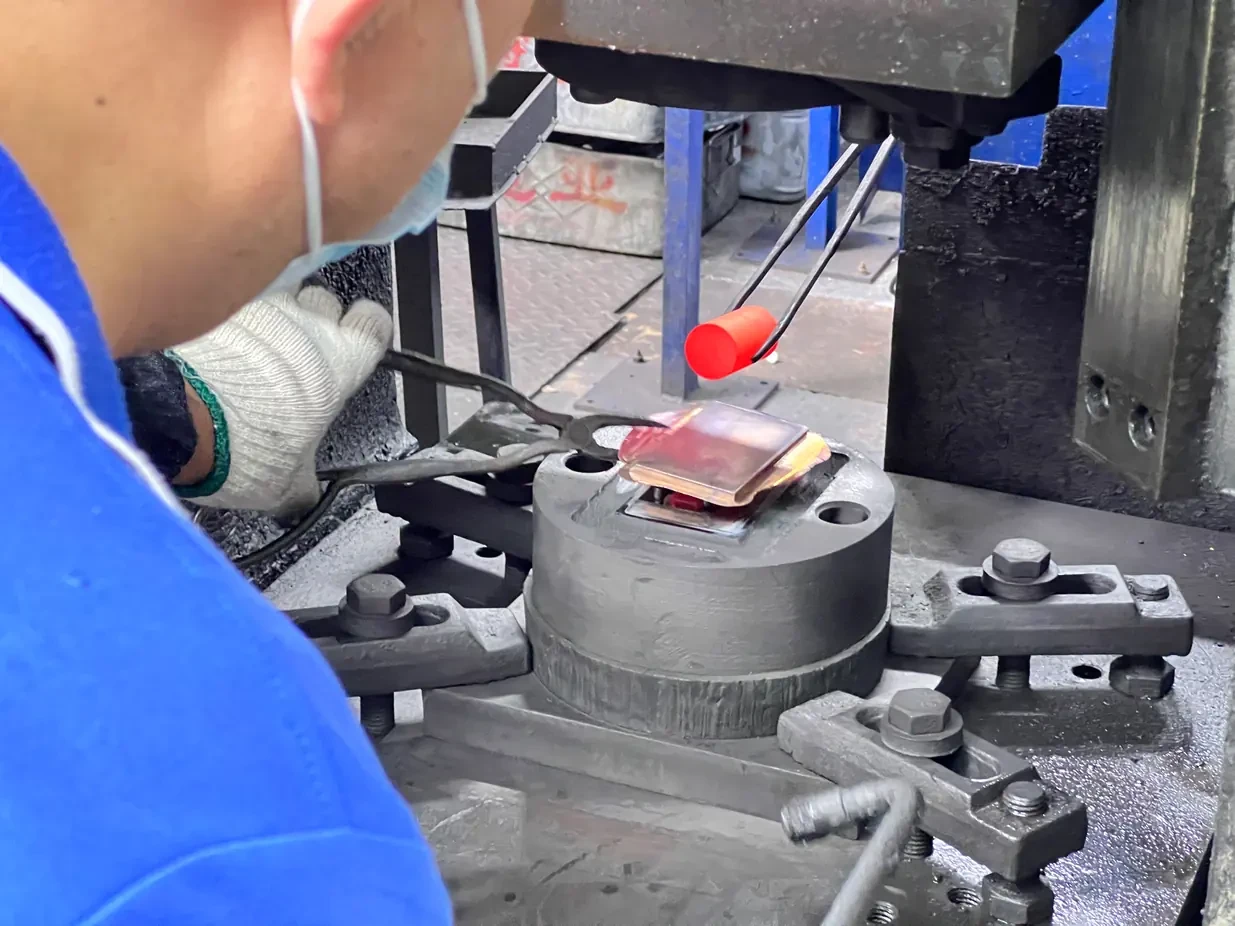
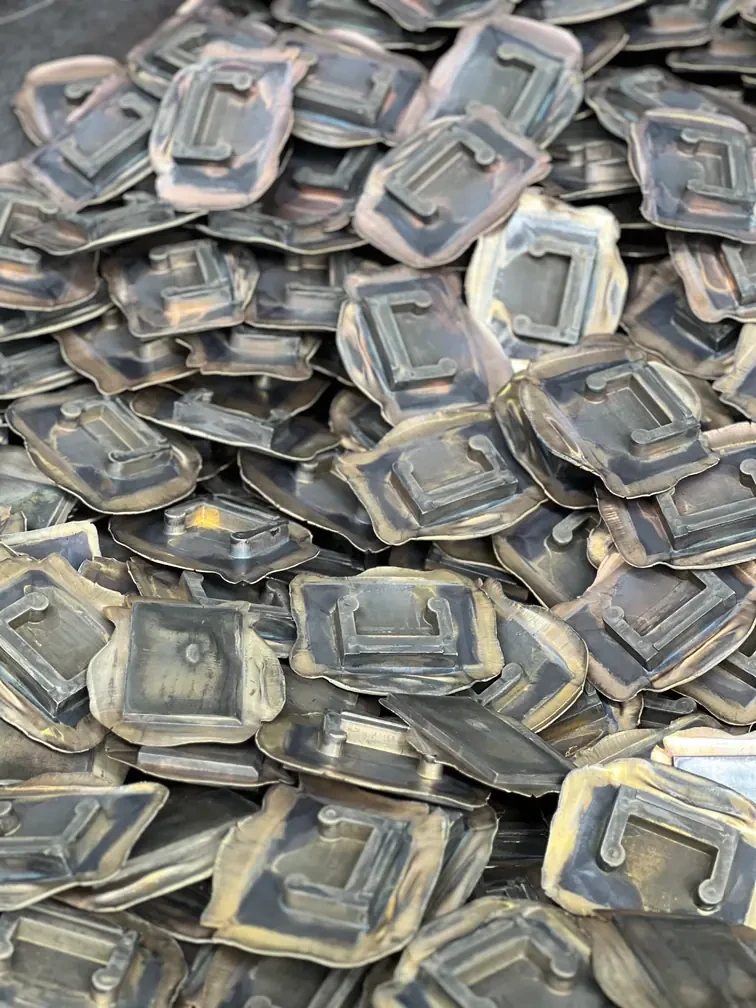
Handle production overview [E06b]
CNC Machining to the Drawing
CNC machines use computer controls to guide cutting tools. The tools remove metal to form holes, slots, faces, and other features. A fixture holds the part in place during this work.
A fixture holds the part while the tool cuts. A gauge checks a size after the cut. On a handle, one useful measurement is the distance from the center of one mounting hole to the center of the other. Two holes can each have the right diameter and still sit too far apart.
The drawing gives the target size and its tolerance, the amount that size may vary. A useful inspection entry names the drawing revision, the feature, the allowed range and the reading. It also identifies the sample. That lets the buyer tell which part the team actually measured.

In this review photo, the team has a 3D model on screen and drawings on the table. That is where a detail such as the location of a hole can be discussed. A dated drawing records the decision. The first piece made to that drawing gives the team something to measure before it runs more parts.
Machining and process control [E06a]
3. Routine Checks for CNC Equipment
LOIRE supplied two records that answer different questions about its CNC machines. CM02 is a guide to machine care. CM01 is a filled-in sheet for one machining center. A buyer looking for the size of a finished part would need its inspection record as well.
What the maintenance guide calls for
CM02 lists ten daily checks. They cover cleaning, noise or vibration, tool changes, controls, air supply, cutting fluid, oil, fixtures, cabinet ventilation and spindle cooling. It gives two monthly tasks. One covers the guide rails and lead screws. The other covers the oil unit that releases the tool.
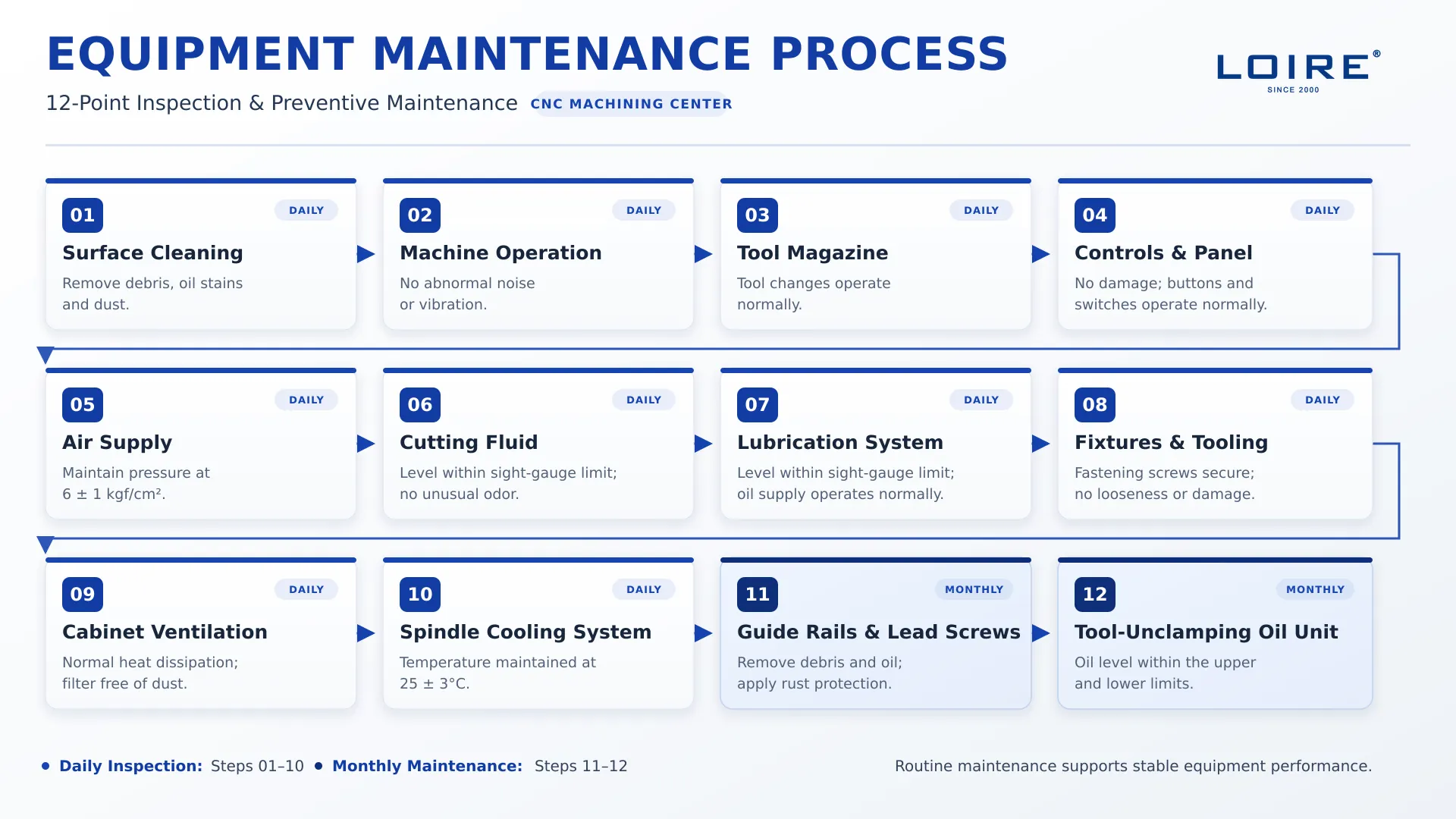
The guide sets the air supply at 6 ± 1 kgf/cm² and spindle cooling at 25 ± 3 °C. These are the settings named in the guide. An actual pressure or temperature reading needs a date, a machine number and a recorded value.
What the June sheet records
The Chinese sheet identifies machining center No. 2 and June 2026. Its note tells the operator to check the machine before each shift. Several boxes in the first date column carry a check mark. Other boxes are blank. The marks show what someone entered for that machine.
The record for CNC machining center No. 2
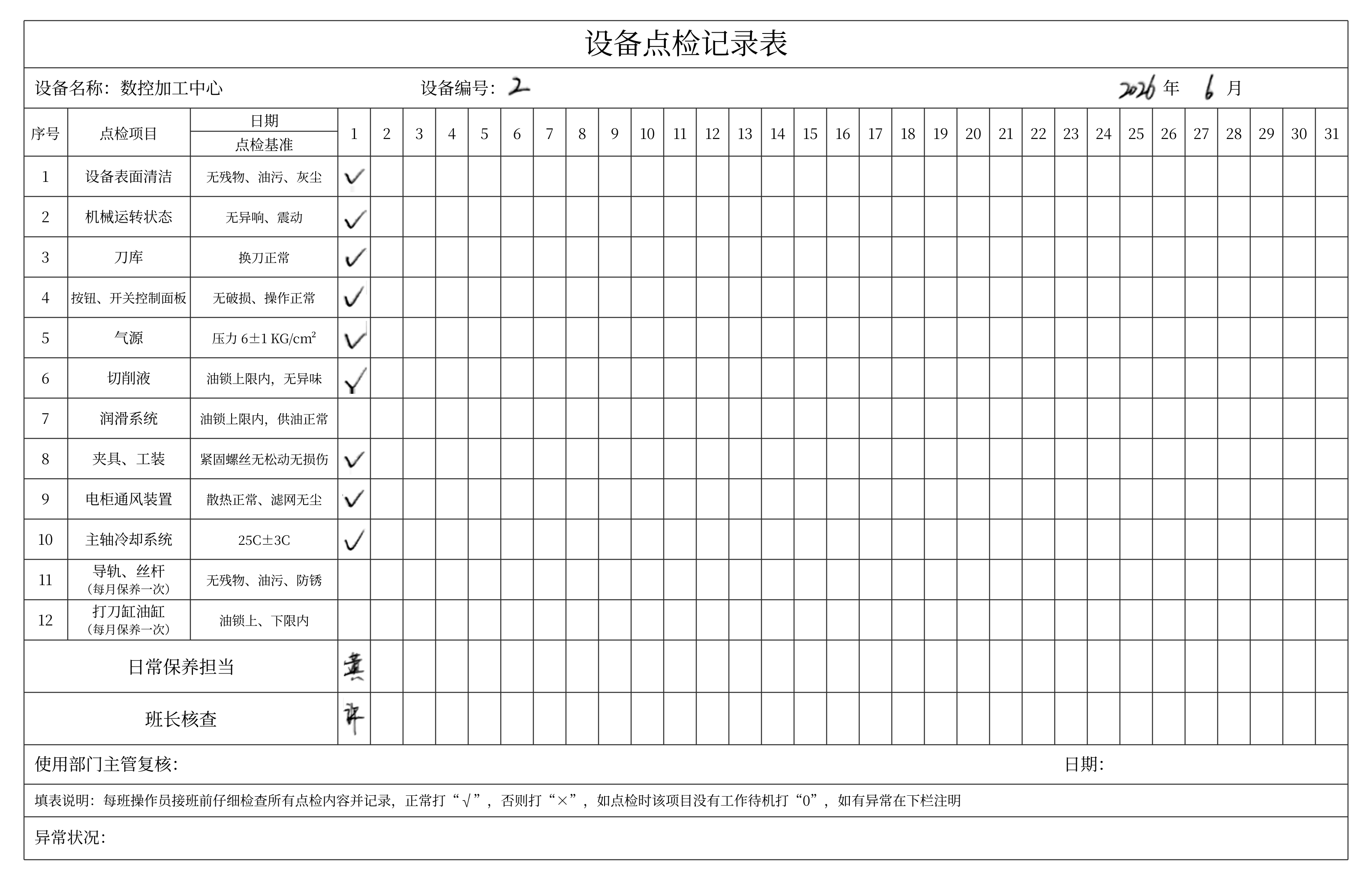
A check mark beside the air supply records the operator’s check. The sheet has no pressure reading beside that mark. It also has fields for staff sign-off and faults. A buyer tracing a fault would need the dated entry, the repair and the follow-up check.
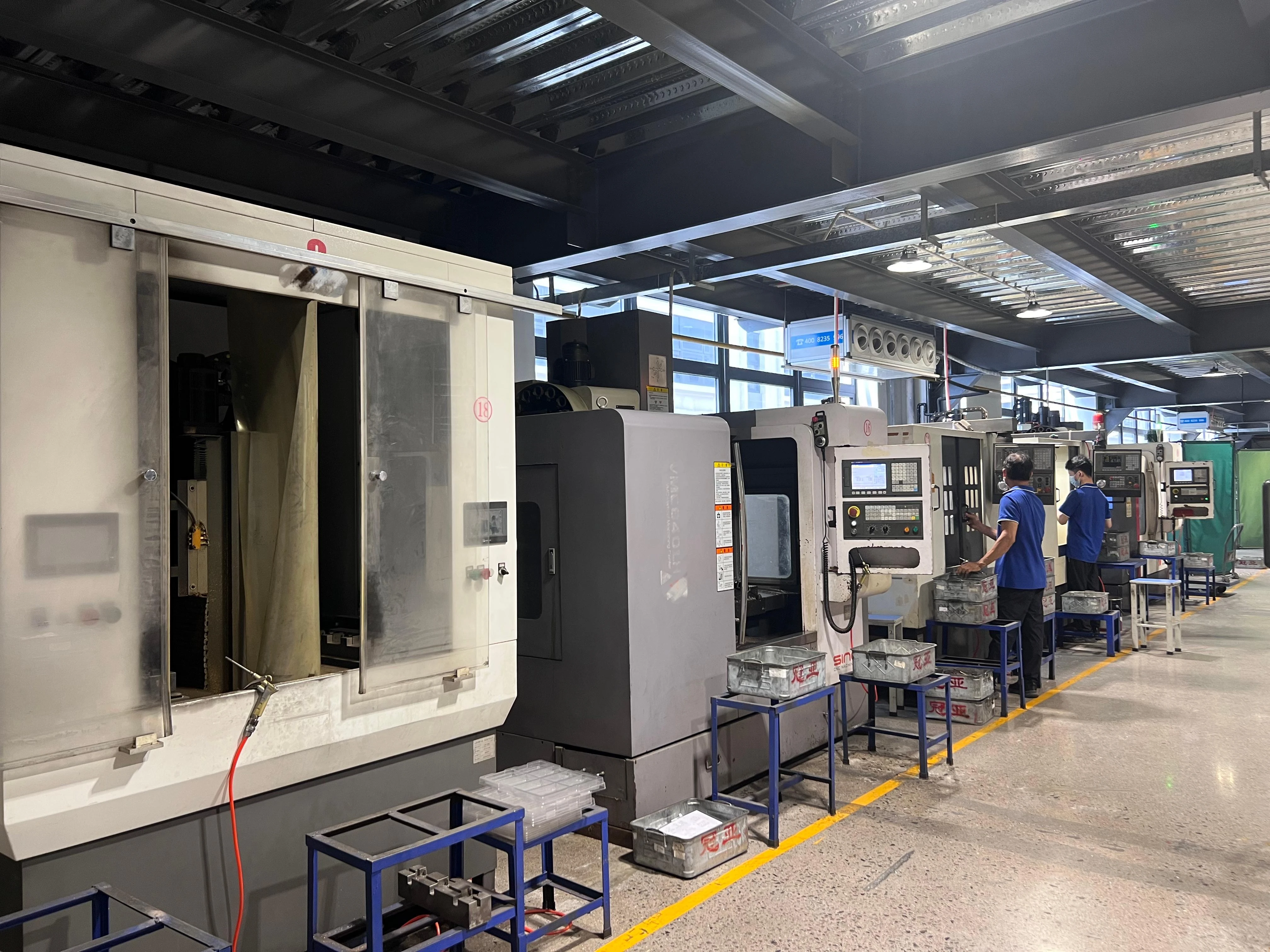
Machine care and product inspection leave different records. For a question about a hole that fits poorly, the useful document is the inspection entry for that hole on the matching model and drawing.
4. Grinding and Polishing for the Required Surface
After a part takes shape, its surface needs work suited to the final finish. Grinding removes rough areas and marks. Polishing uses fine abrasives to smooth the surface.
LOIRE’s surface process guide shows wet grinding, machine grinding, manual grinding, machine polishing, and manual polishing. The steps used depend on the product design, material, and required finish. [SF01]
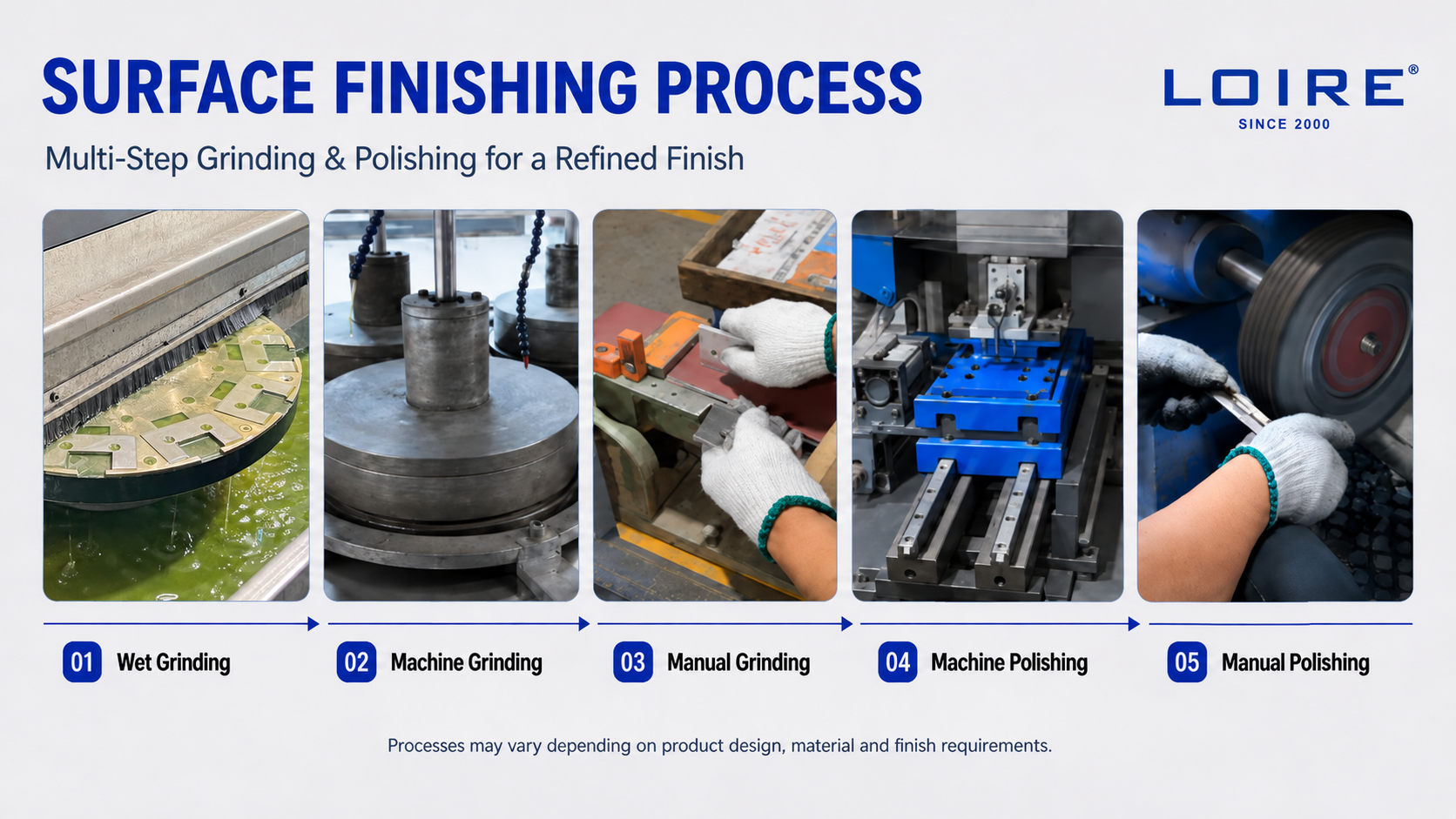
A broad face gives the wheel room to reach it. The inside of a bend or the edge around a screw recess gives it less room. LOIRE’s polishing video describes hand work at corners and checks for scratches or uneven areas. Those details can be hard to see in a front view of a finished part.
What counts as a finish match?
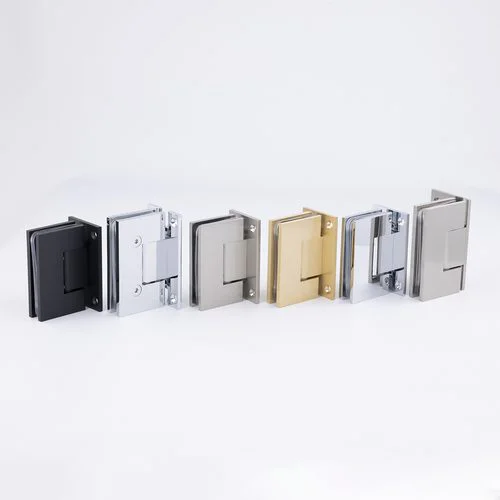
LOIRE’s finish card lists two brushed nickel options, BN and BN2. A purchase order that just says “brushed nickel” leaves that choice open. A finish code and a physical sample give both sides a reference. For a hinge and handle sold as a set, comparing them side by side under the same light shows differences in shade, shine or brush direction.
For a plated model, the finish record also needs the base metal and the coating specified for that part. The grinding guide covers surface preparation. A claim about coating thickness or corrosion needs its own measurement or test for that finish.
How the finishing tools reach the part
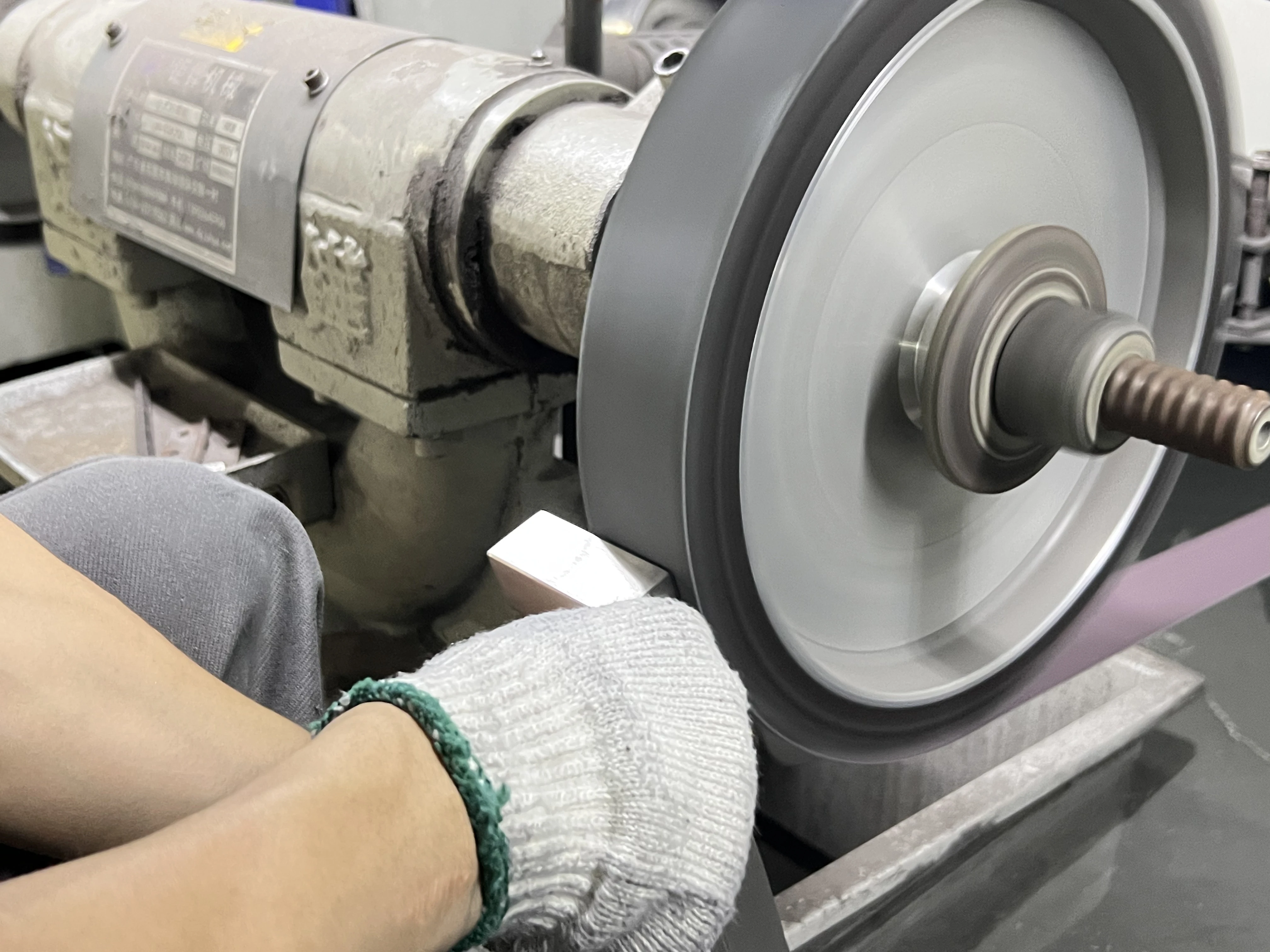
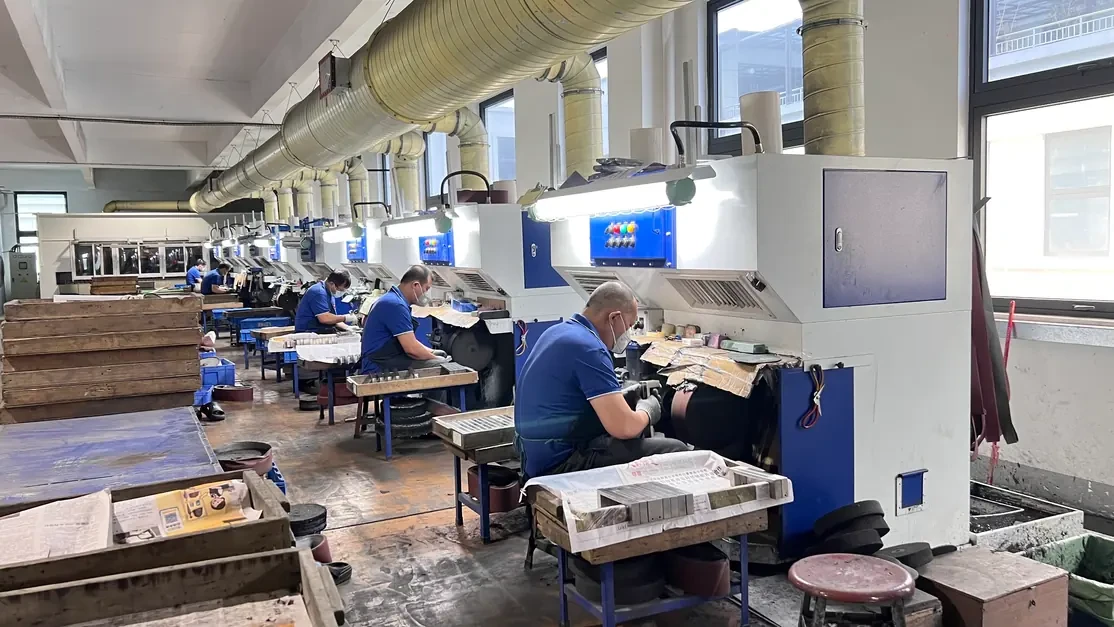
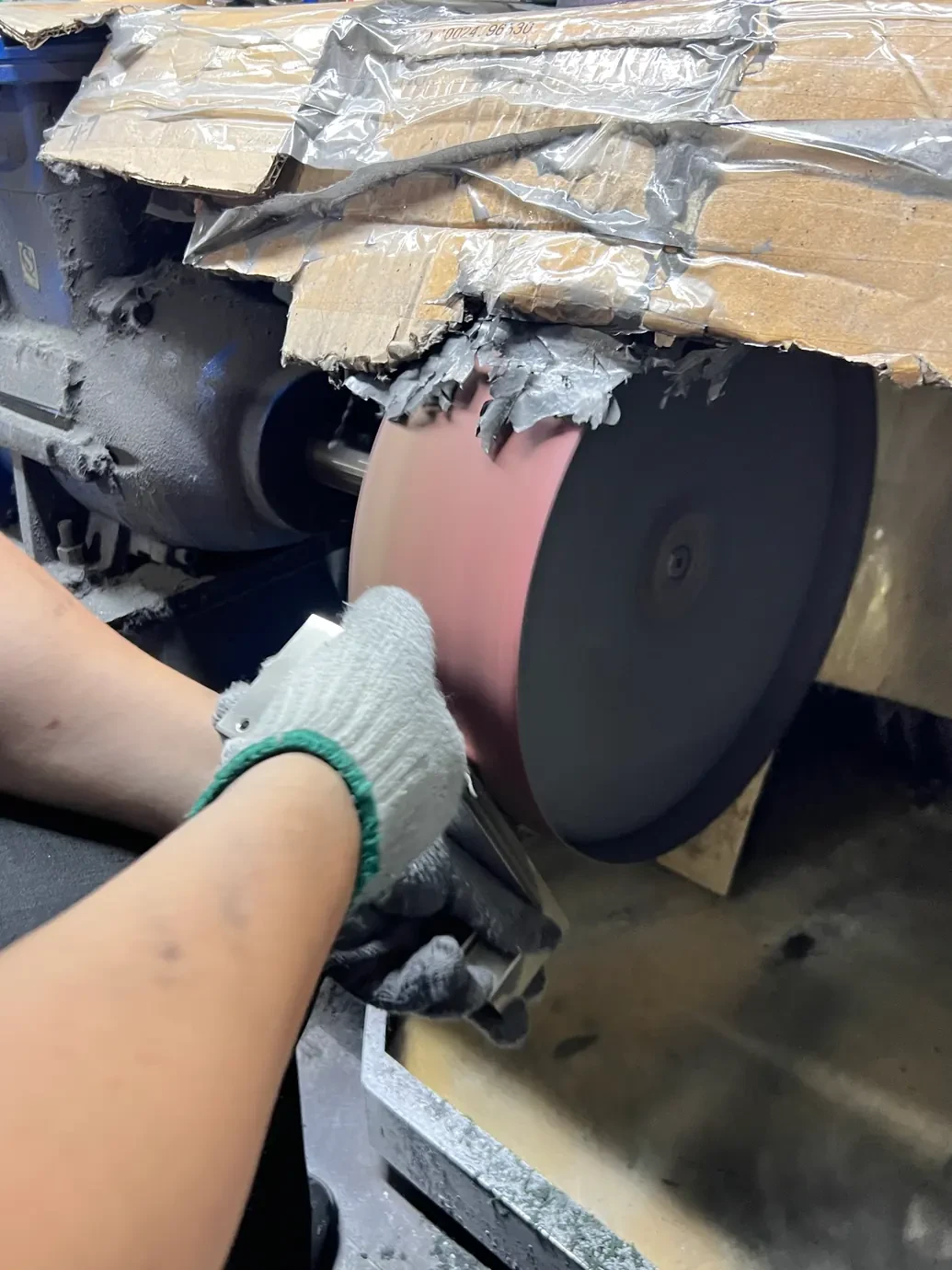
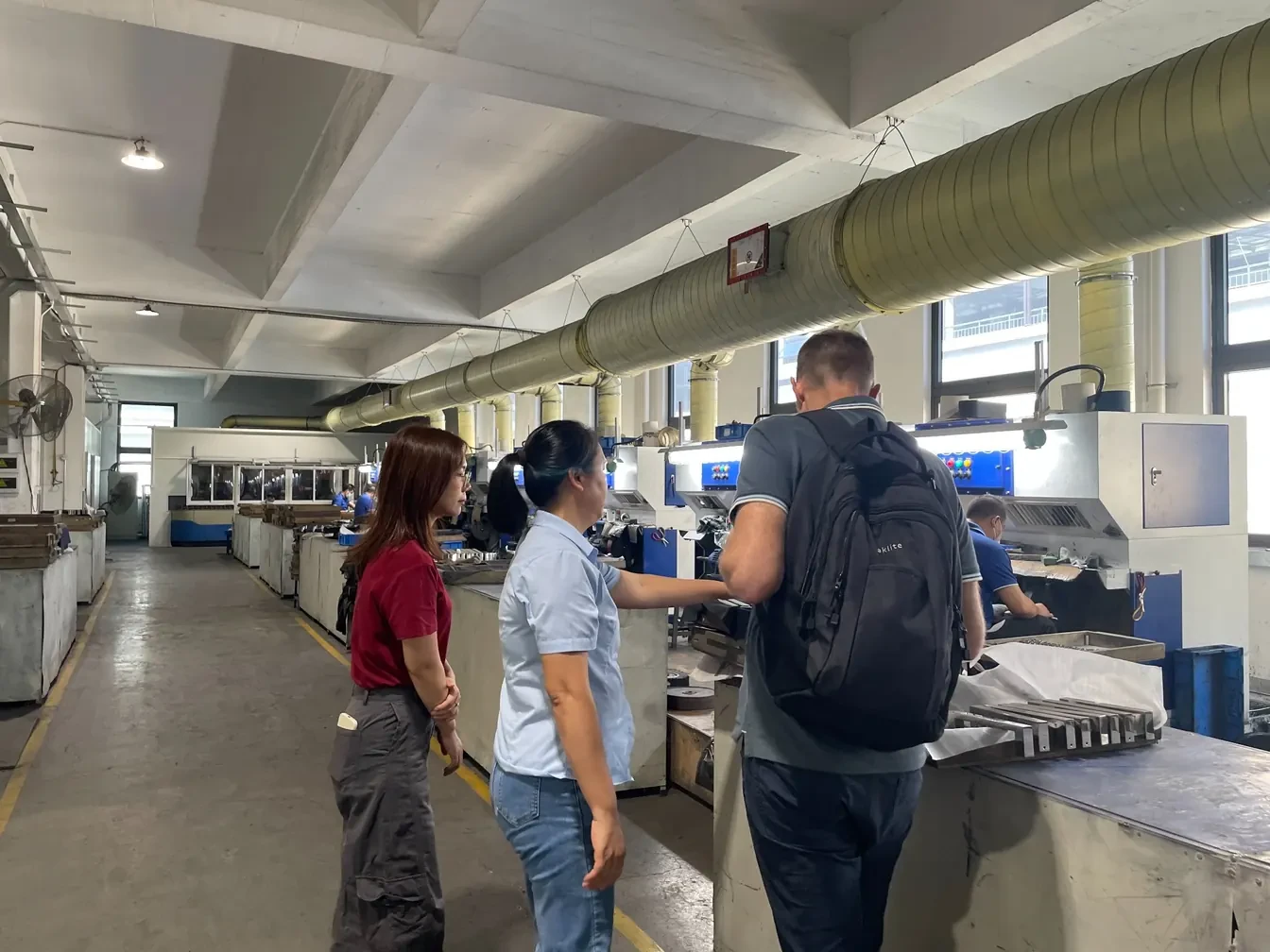
The wide view shows separate workstations. In the close-up, a worker brings a small area of the part against the abrasive. On an approved sample, it helps to mark which faces will show when the fitting is on the door. The buyer and the shop can then judge a mark in the same place.
For a repeat order, the sample number and finish code belong with the drawing revision. If the finish changes, a new sample gives the next order a clear point of comparison.
5. Assembly and Checks Before Packing
Those details matter when a drawing becomes a finished product. A parts list defines what belongs in the model. A size check compares the part with the drawing. An assembly check reviews how the parts work together.
LOIRE’s quality video describes five checks. The first piece gives the team an early size check. During machining, the team can measure features as it cuts them. The surface check covers appearance. The assembly check covers how the parts fit and move. The last check covers the finished fitting and what goes in the box. [VN03]
For a hinge, check how it should open and close. For a fixed glass clamp, focus on how it mounts and fits the glass. Keep the checks tied to the product’s job.
On a hinge, the body and plate may each match their drawings. The assembled hinge still needs to move as the model calls for. On a fixed clamp, the parts list identifies the pads and screws. The assembled sample shows how they sit against the glass thickness named for that model.
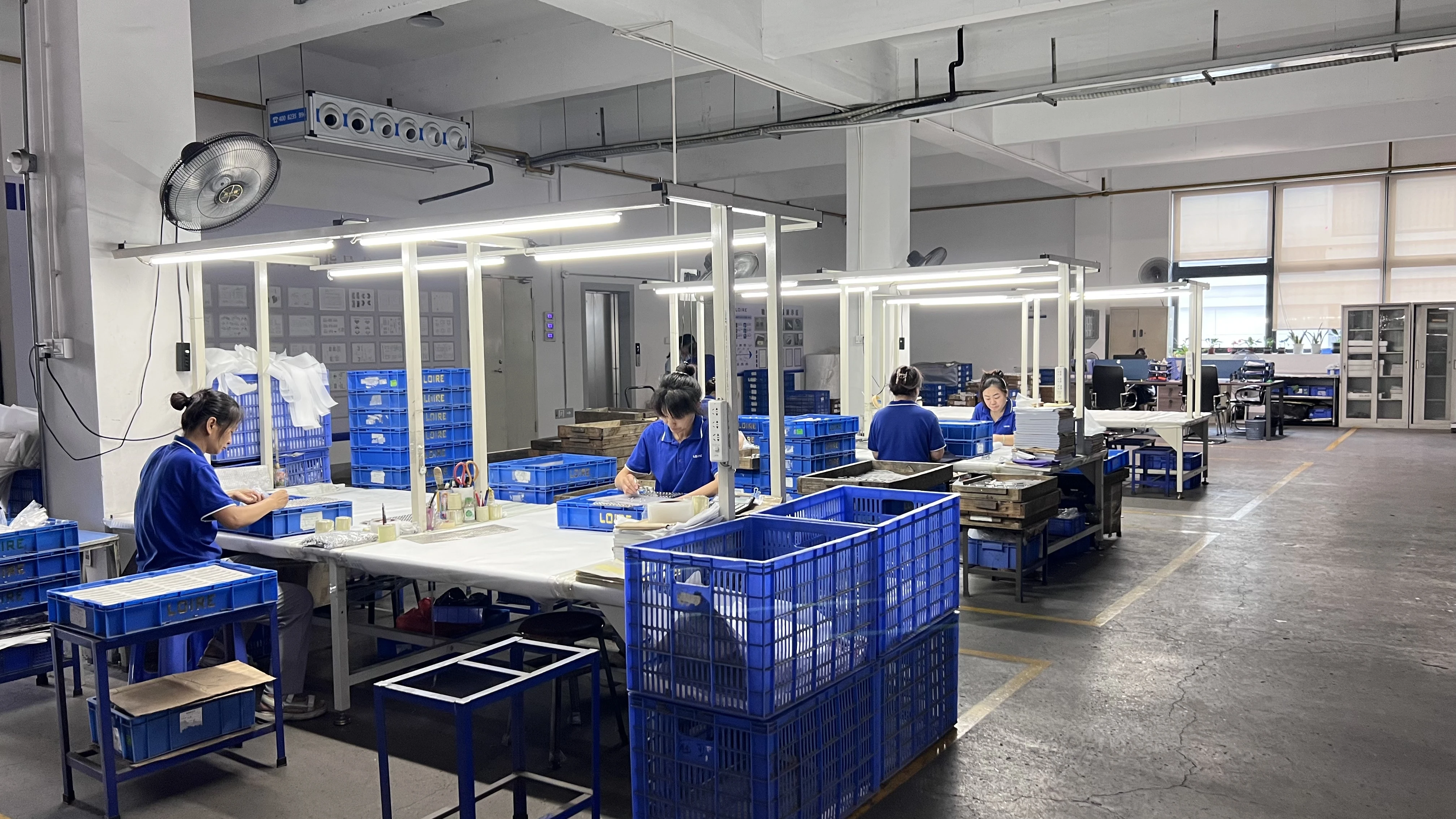
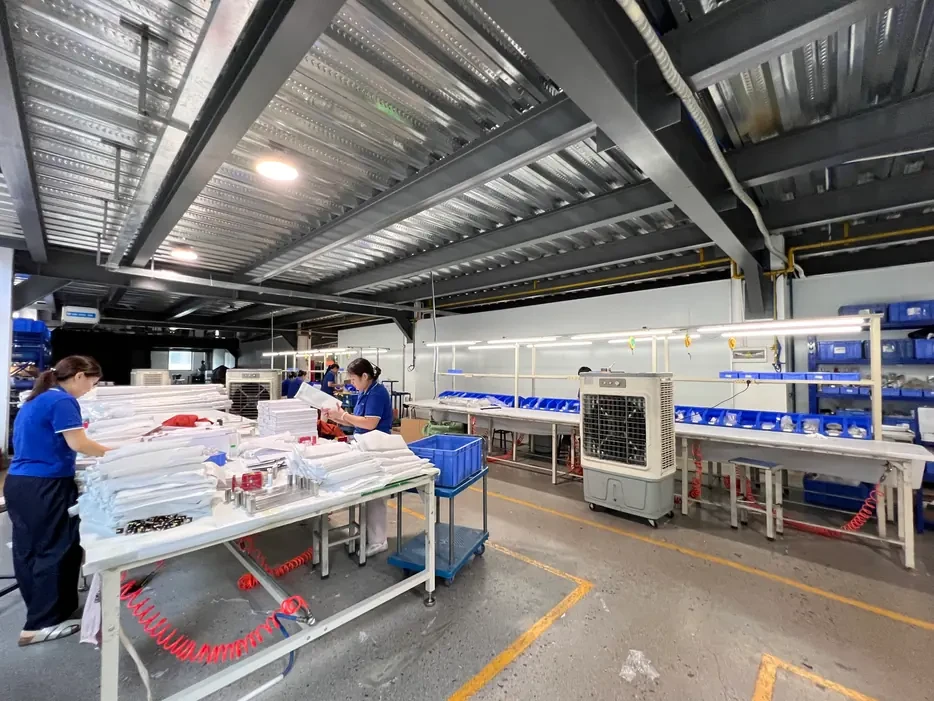
The photos show the benches and packing materials. The record that lets a buyer review a particular shipment names the model, sample or lot, check and result. For a measurement, it includes the reading. For movement or appearance, it says what passed or needed work.
6. How Production Records Support Order Planning
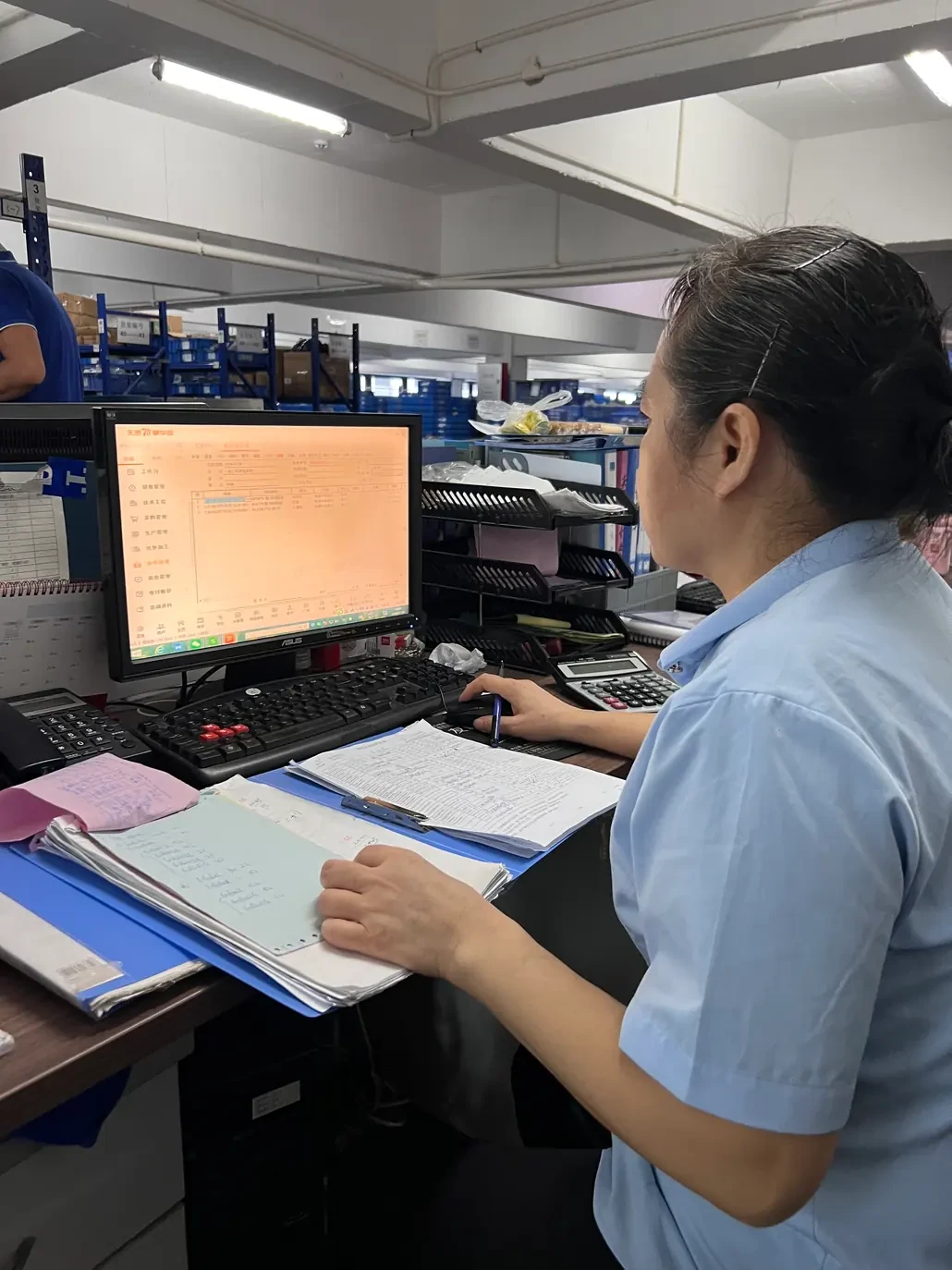
The August 2026 production sheet LOIRE supplied contains 65 entries for 60 model codes. They cover five dates in August (1, 3, 4, 5 and 6).
Standard units = recorded quantity × model factor.
For example, the first August entry for model 2123 lists a quantity of 500 and a factor of 1.2. That gives 600 standard units. The sheet uses the result to add work across models. It leaves the counting unit for the quantity column open.
| Field in the August sheet | Value | How to read it |
|---|---|---|
| Monthly target | 80,000 standard units | Goal for the full month |
| Warehouse receipts to date | 16,134 standard units | Total for the five dates shown |
| Gap to the target | 63,866 standard units | Target minus receipts to date |
| Total in the quantity column | 22,660 | The source gives no counting unit. |
| Daily figure in the header | 3,696 standard units | Matches the sum for August 6. |
The original production table is in Chinese. It has been translated into English here to help readers understand the information.
At what stage did the goods enter the warehouse? The sheet leaves that open. To work out a ship date, the planner also needs the finish, the pack and the time left on the schedule for that model.
7. Packing Hardware for Wholesale Orders
A wholesale pack has two jobs. The inner pack keeps the hardware and its small parts together and protects the finish. The outer carton tells the receiving team what is inside and how many packs to expect.
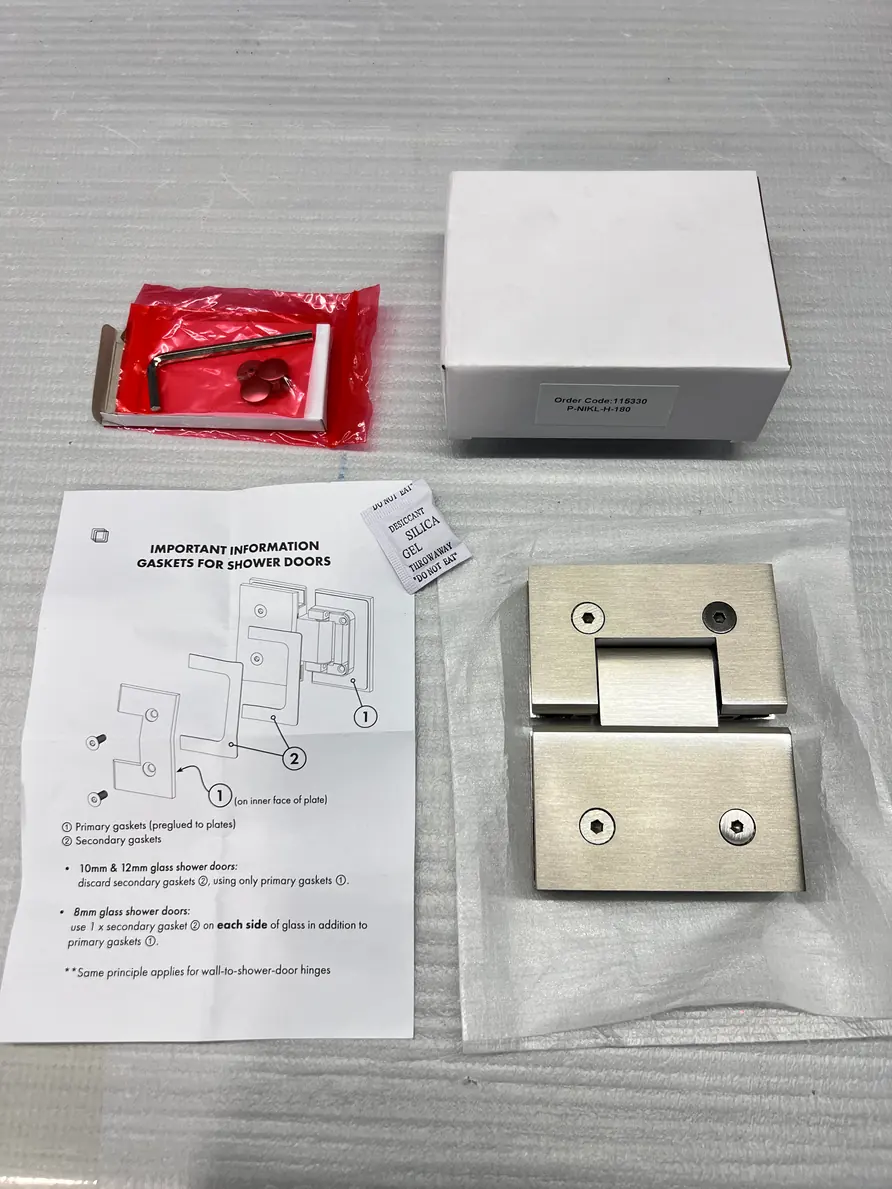
In the hinge photo, the metal fitting sits on a sleeve. The gasket sheet and accessory packet sit beside it. That layout lets a buyer review what the installer will see on opening the box. The model’s parts list supplies the counts. A closed sample shows whether loose metal can reach the finished face in transit.
LOIRE’s OEM service lists custom labels, instructions and carton marks. For a distributor, a retail label may need a model and finish code. The warehouse may also need the pack count and its own item number on the outer carton. Keeping the artwork revision with the approved pack sample gives a repeat order the same reference.
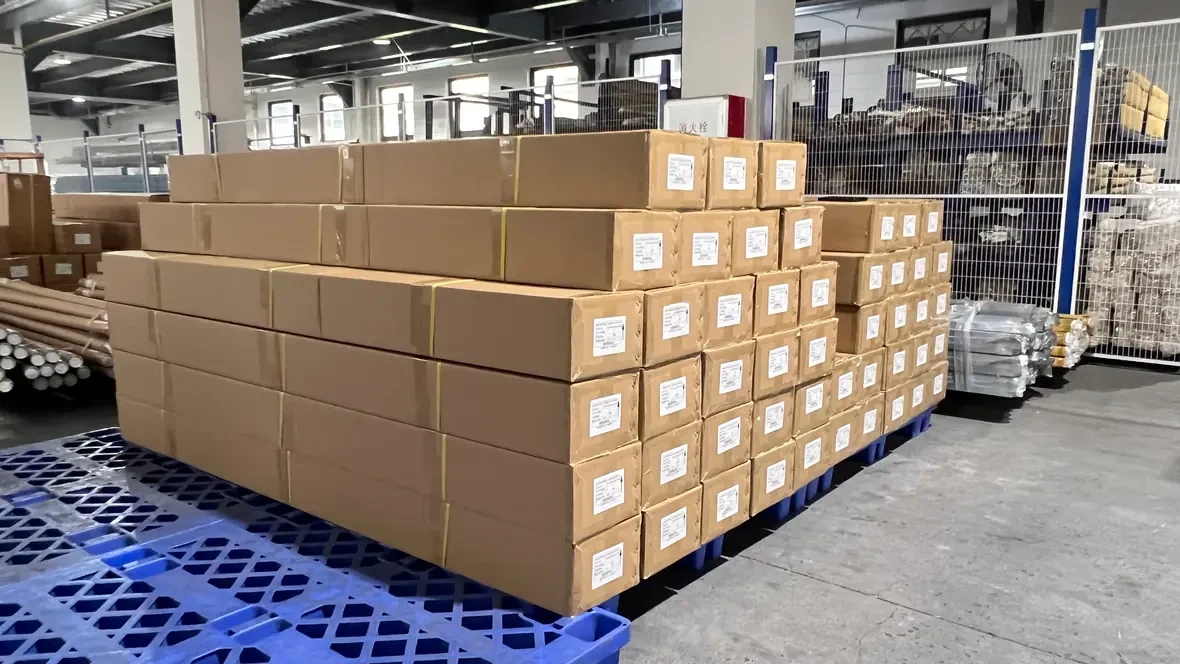
The cartons in the photo carry labels that face the aisle. The photo does not link those cartons to the hinge shown above. For a specific order, the carton label and the packing list would supply that link.
8. What a factory quote includes
Two handles can look alike in a catalog and still take different work to make. A useful comparison starts with the metal, the mounting dimensions and the finish sample. It also states which checks, accessories and labels the price includes. Those details give a buyer a way to see what a higher quote would pay for.
Three questions that came up in buyer conversations
A buyer singled out the price of brass hardware. LOIRE’s reply pointed to the metal and finish. For that comparison, the first detail to settle is which part is brass. A hinge body and its screws can use different metals. A parts list and a material record for the quoted body would let the buyer compare the same item. [CC08]
Another exchange reached a simpler sticking point. The buyer said the price was too high. LOIRE suggested a small trial and asked which item was over budget. The shared messages end at that proposal. For a trial like this, a drawing, a finish sample and a packing list would tell both sides what to judge. [CC04]
In a September exchange, a buyer expected a large factory order to cost less. On September 15, the buyer said their distributor still offered a lower price and they would keep buying there. To explain a gap like that, both quotes would need the same model, order size, finish, packing and delivery terms. The messages give the buyer’s decision, but no itemized cost comparison. [CC06]
For a repeat order, one short record can tie the quote to the goods. It lists the model and drawing revision, approved finish sample, checks due, accessories per box and packs per carton.
Where a display sample fits
The glasstec display shows handles, knobs, bars and hinges. The China Glass booth below includes door displays. A booth photo helps identify a shape. A model number links that shape to the drawing and the quote.

LOIRE identifies its booth at 00:59 in Now Türk’s report on glasstec 2026 in Düsseldorf. The time comes from LOIRE. The report and trade show photos document the setting. Drawings, inspection records and packing samples provide the model details used in this guide.
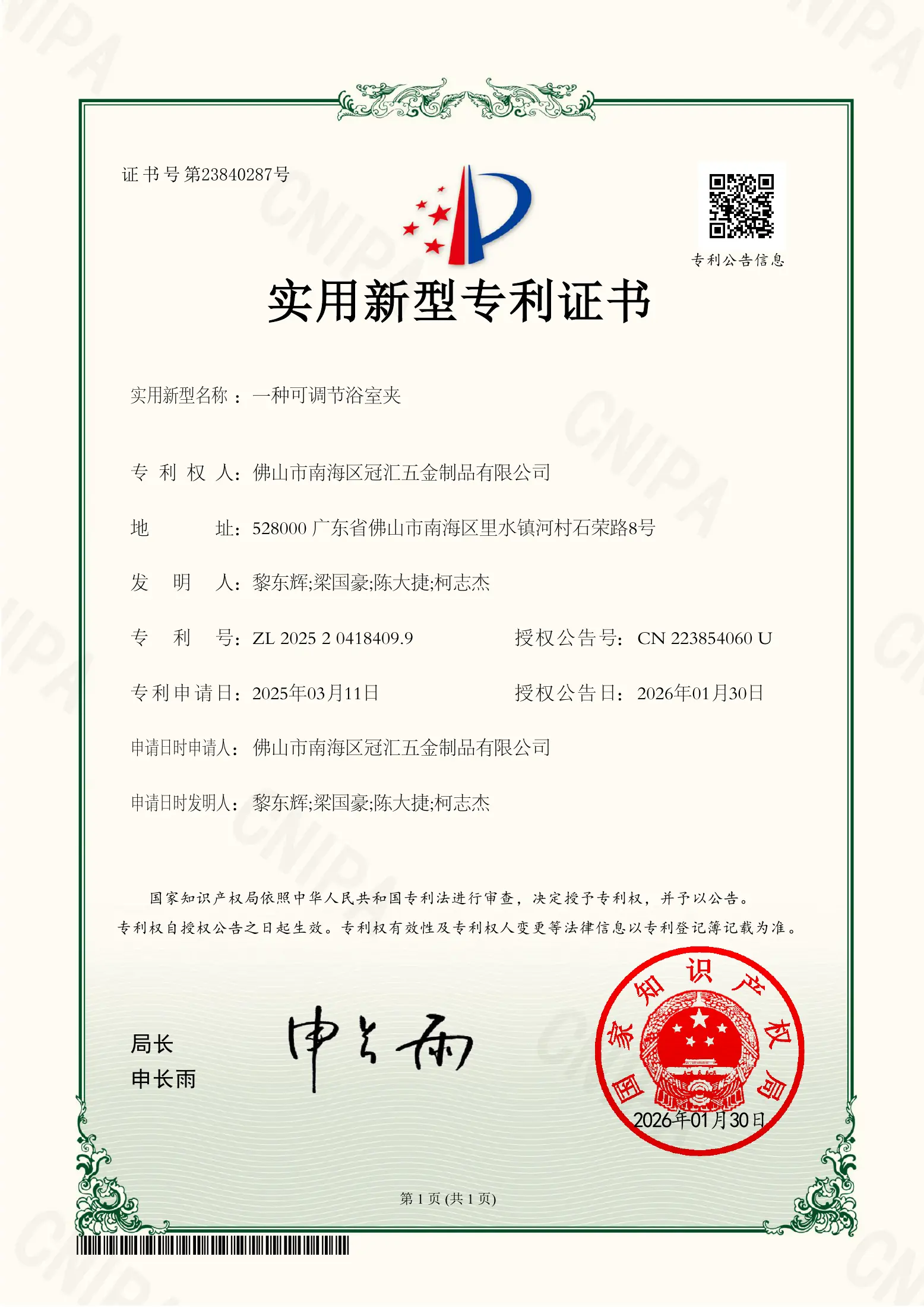
The adjustable fitting in patent record PT11
The supplied Chinese utility model certificate displays the number ZL 202520418409.9 and a grant date of January 30, 2026. It names Foshan Nanhai Guanhui Hardware Products Co., Ltd. (a translation of the Chinese name).
The certificate identifies a design for an adjustable fitting. To connect it to an item for sale, the reviewer still needs the patent drawing and the matching model. Load, service life and production volume each require separate evidence.
Which records describe the fitting in the box?
For the buyer, the link starts with the model and revision on the drawing. The finish sample shows how the part should look. The inspection entry records what the shop measured or checked. The packing list names what belongs in the box. Together, those four records describe the product that two suppliers may have priced quite differently.
How This Article Was Created
About the Author

Irene Kong is the CEO of LOIRE Hardware, which operates an 8,000 m² factory in Foshan, China. She has worked in international trade at the company since July 2007 and has more than 16 years of experience with frameless shower door hardware. She advises buyers on finishes such as satin brass, matte black, and gunmetal.
Manual Fact-Checking
Irene Kong, CEO of LOIRE Hardware and author of this guide, reviewed and approved this article on .
How We Used AI
AI helped rewrite the English, shorten sentences and turn the maintenance and production figures into readable text. It also compared the captions with the supplied pictures and drafted English summaries from three anonymized customer conversation notes. The buyer examples are paraphrases. AI did not conduct a factory audit, take readings or test a product. Additionally, we have used artificial intelligence to convert the original photographs from JPG to WebP format. This article was co-authored by Irene Kong and published by Loire Hardware.
How We Built This Guide
The starting point was LOIRE’s manufacturing article and its 22 original images. The revision follows the work from stock to the packed fitting. The machine care section draws on the CM02 guide and the CM01 sheet for machine No. 2. The finish section uses SF01 and the company finish card. The production figures come from one August sheet and its English summary, CP01. The three buyer examples come from separate exchanges in the company files. They illustrate questions about price and what the buyer could compare.
Public Sources
LOIRE company information · Foshan factory · OEM services · Company location and details
Handle manufacturing [E06b] · Machining and process control [E06a]
Factory introduction [V01] · Packaging video [V04] · Foshan factory tour
Machining [VN02] · Tube handles [VN10] · Polishing [VN01]
Quality checks [VN03] · Assembly and packing [VN06] · Now Türk report [VN13]